Can Adjuvants Boost the Bottom Line?
Apr 15 2026
Overlooking adjuvants in spring herbicide applications could be costly.
Start clean, stay clean. Sounds simple in theory, but when it comes to weed management, making it happen (and on a budget) is easier said than done.
As valuable as spring burndowns are, a burndown alone doesn’t usually cut it. Between weeds’ herbicide tolerances, trait-specific requirements, changing regulations and more, controlling weeds takes a complex tank mix and careful planning.
With all those moving parts, it’s understandable why so many growers overlook adjuvants. But that could be a costly mistake, according to Dylan Tyler, an agronomist with WinField® United.
Should Growers Use an Adjuvant?
Throughout his time as an agronomist, Dylan Tyler has seen and heard it all. He tells us many growers ask if adjuvants are really necessary in their herbicide applications. Tyler’s response? “Yes, without a doubt. Adjuvants should be included in every tank mix to help get chemistries to the target.”
Tyler emphasizes the right adjuvant can help ensure herbicide is working towards its purpose.
“In a hostile environment of weeds, you need to level the playing field to give herbicides a better shot at success. An adjuvant is just that — it levels the playing field, giving you an advantage over weeds,” he says.
Research by the Council of Producers and Distributors of Agrotechnology (CPDA) shows how critical the right adjuvant is in achieving proper control. By excluding an adjuvant (when the label calls for one), growers could face a 30-90% reduction in herbicide performance.1 Including the wrong type of adjuvant also is risky, with the potential for herbicide performance to decrease by up to 50% and the possibility of crop injury.1
What Type of Adjuvant is the “Right Adjuvant?”
Many common herbicides require an oil adjuvant to emulsify the tank mix and reach their full potential.
Tyler explains, “Beyond emulsifying, oil adjuvants play a key role in herbicide uptake. When pesticides are sprayed, the droplets sit on the leaf’s waxy surface, where they face the possibility of being degraded by the sun before they absorb into the plant. Oil adjuvants help prevent this by dissolving the plant’s waxy cuticle, facilitating quicker and increased uptake.”
There are two broad classes of oil adjuvants: methylated seed oils (MSOs) and crop oil concentrates (COCs). This includes those with a high surfactant component (HSMSOs and HSCOCs). The primary agronomic difference is MSOs are intense with more potential phyto than COCs but can be necessary in certain fields to get effective weed control.
To choose the best for your grower’s needs, Tyler suggests starting with the herbicide label’s recommendation.
What About The Bottom Line?
While input costs are admittedly high, recommending an adjuvant for herbicide applications could pay off in greater overall ROI for growers.
“Analyzing expenses alone isn’t always helpful,” Tyler says, suggesting a shift in focus to ROI.
“Look at weed control holistically. Every droplet from the sprayer is just as important in the process as those bigger line items — the sprayer, the driver, the nozzles. When those don’t work, you throw away dollars, time and yields. The same principle applies for chemistries. For every droplet lost to drift or degradation, that’s another negative towards ROI. And if you don’t manage weeds effectively the first time, the cost of additional applications is higher than the initial investment of a good adjuvant,” Tyler notes.
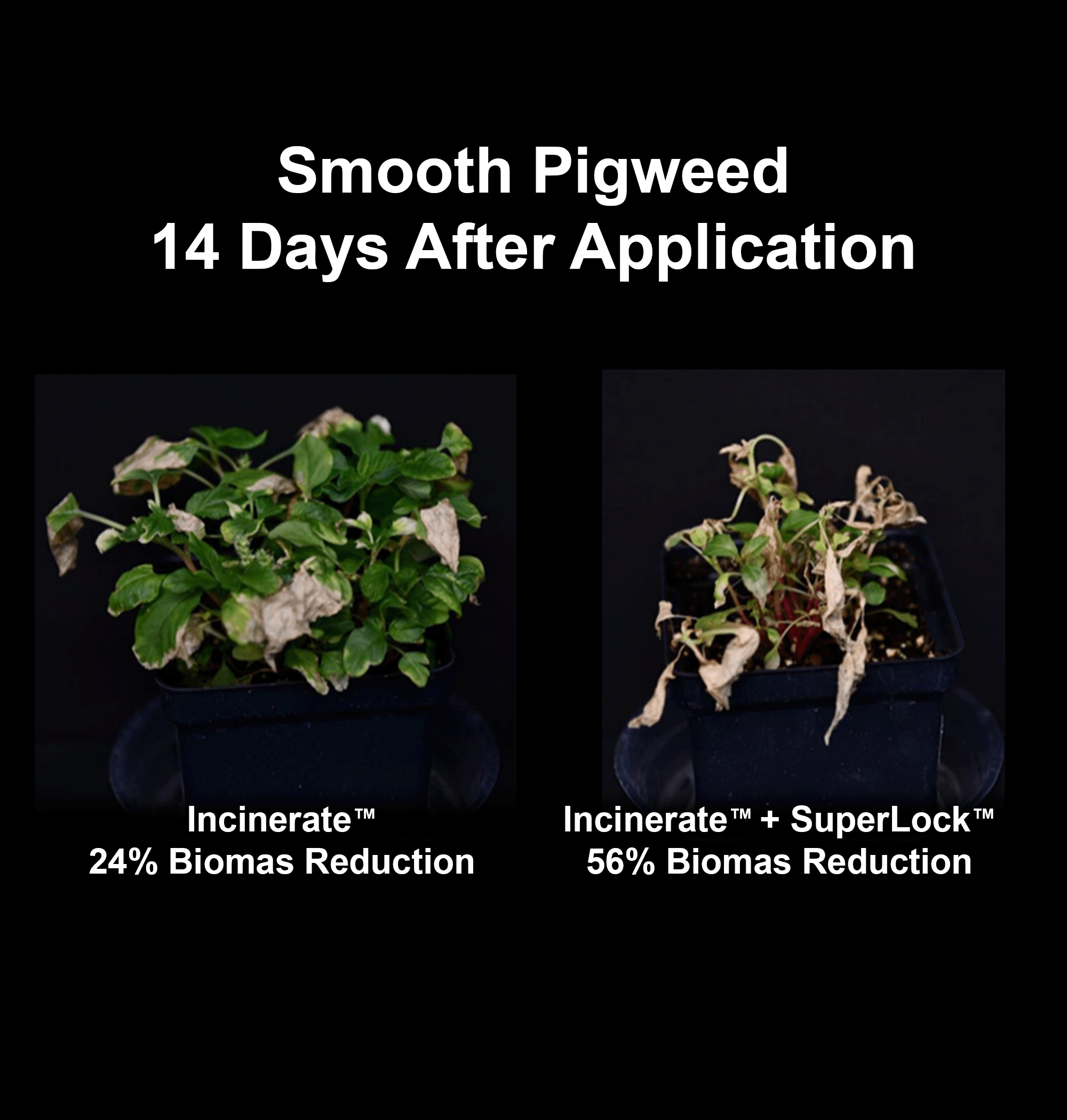
For growers looking to stretch herbicide performance and dollars, Tyler recommends SuperLock™ adjuvant.
“SuperLock™ adjuvant is one of the firsts in the industry to add drift reduction to a crop oil,” he explains. “By combining a HSCOC and drift and deposition aid, SuperLock™ adjuvant is a convenient option to maximize ROI potential with minimal effort. It’s also flexible across tank-mix partners, including glufosinate, 2,4-D, clethodim and mesotrione,” Tyler adds.
An Agronomist’s Final Word
“If growers are thinking about what is cheapest instead of what will improve ROI, they might only be hurting themselves,” Tyler cautions. “As you think about 2026, I urge you to re-evaluate your grower’s weed control goals and determine an adjuvant plan that will work for their fields and budget.”
1Council of Producers and Distributors of Agrotechnology, 2022. https://cpda.com/wp-content/uploads/2022/07/CPDA-Adjuvant-Cert-Program-Flyer-2022.pdf.