Staying Ahead of the EPA’s Herbicide Strategy
Sep 21 2026
As growers navigate the new rules, here’s how to help them meet any label requirements.
In August 2024, the U.S. Environmental Protection Agency (EPA) finalized its Herbicide Strategy, calling it an “unprecedented step” toward protecting more than 900 federally endangered and threatened species from the potential impacts of herbicide use.
While the strategy isn’t brand new anymore, there are still lots of questions out there about its implementation, and retailers are often the first place growers turn to make sense of what’s changed or will be changing.
What Your Growers Need to Know
Endangered Species Act (ESA) language is now required on herbicide labels, starting with new active ingredients and expanding as existing actives are re-registered. For growers, that doesn’t mean an overnight overhaul: Only a handful of labels currently carry the ESA language, and the rollout is tied to new product releases and re-registration timelines rather than a single deadline.
Still, it’s worth getting ahead of before the spring rush. As you sit down with growers, here are three key tips to help guide conversations:
- Mitigation isn’t one-size-fits-all. Depending on a product’s risk profile, growers may see different drift and runoff mitigation requirements, along with varying buffer distances — and how those requirements appear on the label can differ from product to product.
- Reading the label matters more than ever. Encourage growers to review new labels ahead of the season, not at the sprayer, and to plan for any added paperwork that comes with compliance.
- Many growers are closer to compliant than they think. Existing practices — buffers, conservation measures already in place — may check several of the required boxes already.
A Simple Way to Meet Drift Mitigation Requirements
For herbicides subject to ESA drift mitigation requirements, adjuvant choice is one of the more direct ways your growers can meet the standard without adding complexity to their program.
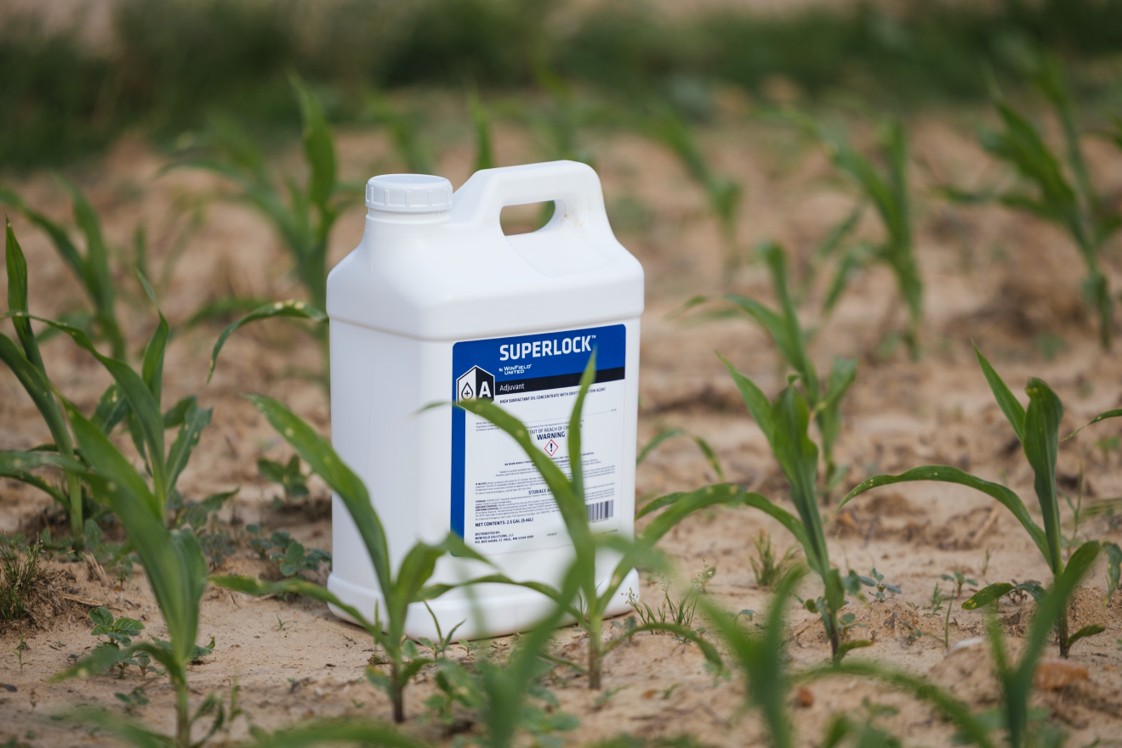
SuperLock™ adjuvant blends proprietary drift reduction technology and a high-surfactant crop oil concentrate into a single formulation, giving growers one product that helps meet ESA mitigation requirements without adding a step to the tank mix.
WinField® United’s latest innovation, SuperLock™ adjuvant, combines a high-surfactant crop oil concentrate (HSCOC) with proprietary drift reduction technology (DRT) in a single formulation — placing it in the oil emulsion category, one of the drift reduction adjuvant (DRA) categories currently approved under the EPA’s Herbicide Strategy.
“SuperLock is the kind of product that makes sense for both performance and practicality,” says Ryan Peterson, Crop Protection Product Manager at WinField United. “You’re getting proven DRT and HSCOC technology in a single formulation that checks all the boxes: drift control, herbicide efficacy and crop safety. Plus, it qualifies as a drift mitigation option for ESA. When one product can improve performance and simplify application, that’s an easy recommendation.”
For retailers, that combination means one less conversation to untangle with growers who are already juggling label changes, tank-mix compatibility and cost. SuperLock adjuvant covers drift mitigation and performance from the same jug.
Resources Worth Sharing
As growers start making crop protection decisions this fall and winter, and have questions around any new requirements associated with the EPA Herbicide Strategy, these EPA resources can aid your conversations:
- Bulletins Live! Two: EPA’s official site for ESA bulletins and requirements
- The ABCs of ESA: A plain-language overview of key terms and what the strategy means for growers
- Mitigation Menu (EPA): Details on approved mitigation practices, including runoff and spray drift calculators
The Herbicide Strategy isn’t going away, but it also doesn’t have to be a burden for growers or a hard conversation for retailers. With a little label homework and the right adjuvant in the tank, your growers can meet the label requirements while boosting performance.
For more information on SuperLock adjuvant or the EPA’s Herbicide Strategy, retailers can reach out to their WinField United representative.
All photos are the property of WinField United or used with permission.
© 2026 WinField United. Important: Before use, always read and follow label instructions. Crop performance is dependent on several factors many of which are beyond the control of WinField United, including without limitation, soil type, pest pressures, agronomic practices and weather conditions. Growers are encouraged to consider data from multiple locations, over multiple years and to be mindful of how such agronomic conditions could impact results. SuperLock and WinField are trademarks of WinField United. All other trademarks are the property of their respective owners.